
Wet blasting technology
Cleaning, degreasing, derusting, passivation & drying – fully automated, dust-free and without harmful chemicals.
Wet blasting is a particularly efficient and gentle process for industrial surface treatment. In this process, a precisely calibrated mixture of water and abrasive is continuously fed into a centrifugal wheel or a blasting gun, where it is accelerated in a targeted manner.
Cleaning, degreasing, derusting, passivation & drying – fully automated, dust-free and without harmful chemicals.
Wet blasting is a particularly efficient and gentle process for industrial surface treatment. In this process, a precisely calibrated mixture of water and blasting media is continuously fed to a centrifugal wheel or a blasting gun, where it is accelerated in a targeted manner. The resulting wet pressure jet strikes the workpiece with a defined impact energy and produces – depending on the process parameters – the desired treatment effect.
The combination of water and blasting media allows a wide range of requirements to be met with precision: from thorough cleaning, through the smoothing and matting of surfaces, to preparation for subsequent coating processes or corrosion protection. The water acts as an energy dampener, reduces material removal and ensures consistent, reproducible results – even on sensitive or complex components.
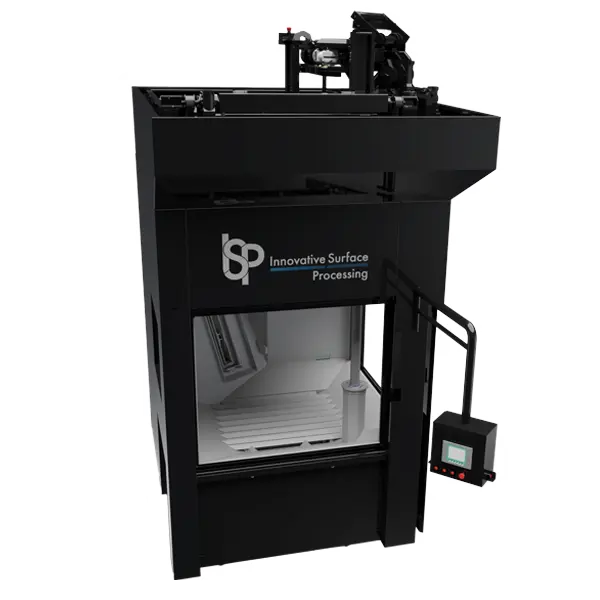
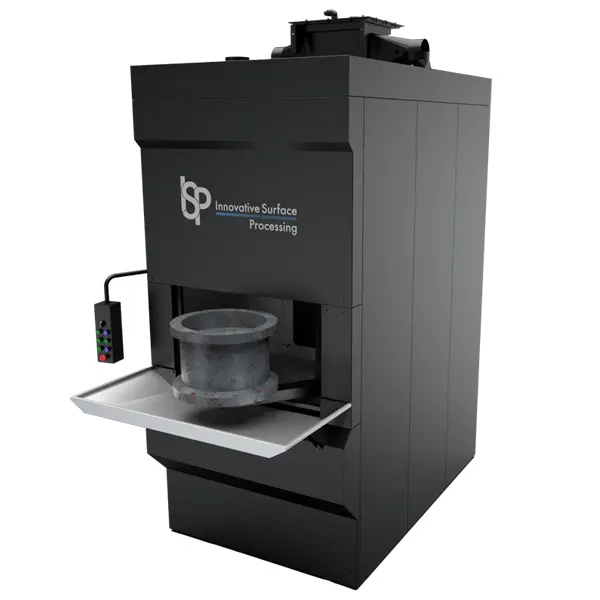
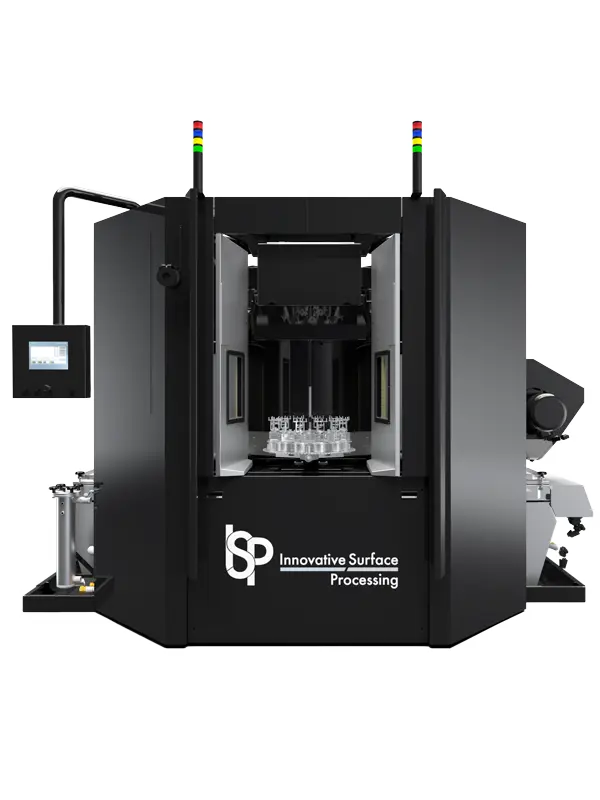

what is wet blasting?
Wet blasting is a dust-free and gentle industrial surface treatment process. In this process, a mixture of water and abrasive is continuously pumped to a centrifugal wheel or a blasting gun, where it is accelerated and directed onto the workpiece. The resulting impact energy is precisely controlled so that the surface is treated without subjecting the component to thermal or mechanical overload.
The water dampens the energy of the abrasive, making wet blasting significantly gentler and causing less wear on the equipment than dry blasting processes. This makes wet blasting technology particularly suitable for sensitive, thin-walled or complex components, as well as for applications with high demands on dimensional accuracy and surface quality.
What are the advantages of wet blasting?
Dust-free process without ATEX requirements
Wet blasting technology offers numerous advantages over traditional dry blasting methods. The process is completely dust-free and causes no electrostatic effects, meaning that no ATEX regulations for explosive dusts are required.
Superior surface quality with no abrasive inclusions
The addition of water immediately binds dust particles and removes them from the process. At the same time, it prevents abrasive inclusions from forming on the surface, resulting in significantly higher and more consistent surface quality.
Low heat generation – Gentle component processing
Only minimal heat is generated during the blasting process. This allows sensitive and precision-machined workpieces to be reliably finished without the risk of thermal stress or deformation.
Efficient post-processing of additively manufactured components (AM)
Wet blasting is particularly effective for post-processing additively manufactured components (AM components), as it removes powder residues and foreign matter even from internal channels, bores and undercuts.
Reproducible surfaces with defined roughness
The wet blasting process produces smooth, uniform surfaces with high precision and reproducibility, making it suitable for rough surfaces as well. Typical surface roughness values are well below 100 µm Ra.
High process flexibility thanks to variable blasting parameters
Thanks to the adjustable abrasive concentration (typically 10–40% by volume) and blasting intensity, the process is also highly versatile and suitable for a wide range of materials and complex geometries.

WHAT CONTAMINANTS ARE REMOVED?
-
Oils & greases
-
Rust and corrosion products
-
Scale and oxide deposits
-
Paints, varnishes and coating residues
- Blasting media and particle residues
- Powder residues from additive manufacturing (AM)
- Dirt, dust and adhering foreign matter
- Burrs and light deposits

APPLICATIONS OF WET BLASTING
- Cleaning
- Degreasing
- Derusting
- Descaling
- Paint stripping
- Passivation/li>
- Corrosion protection
- Metal parts
- Mineral-based workpieces
- Plastics
WET BLASTING WITH A BLASTING WHEEL
The centrifugal wheel wet blasting technique is ideal for the all-round and uniform surface treatment of components with large surfaces. In this process, a mixture of water and blasting media is accelerated by a rotating centrifugal wheel and applied evenly to the workpiece. The water acts as an energy dampener, reduces material removal and ensures a homogeneous surface quality.
Advantages of the centrifugal wheel wet blasting technique
- Uniform, all-round finishing of large component surfaces
- High process throughput with short processing times
- Gentle surface finishing thanks to the water cushion
- Ideal for series production and high throughput
- Excellent reproducibility of surface quality
Nozzle wet blasting technology
Wet blasting technology enables targeted and highly precise surface treatment. The mixture of water and abrasive is fed to a blasting nozzle, where it is accelerated with precision using compressed air. Thanks to the finely adjustable blasting intensity, even complex geometries, functional surfaces or hard-to-reach areas can be treated in a controlled manner.
Advantages of nozzle wet blasting technology
- Precise machining of defined functional surfaces
- Precise control of jet intensity
- Ideal for complex geometries and delicate components
- Very high surface quality with minimal material removal
- Ideal for reworking, fine finishing and detailed machining
UNIQUE ADVANTAGE: COMBINATION OF BOTH WET BLASTING TECHNIQUES
By combining centrifugal wheel and nozzle wet blasting techniques, both large surfaces and specific areas can be processed within a single system.

Advantages
-
Maximum flexibility for a wide variety of components
-
High process reliability and reproducibility
-
Cost-effective surface treatment
-
Wet blasting technology suitable for industrial and series production
-
Dust-free process – no ATEX requirements

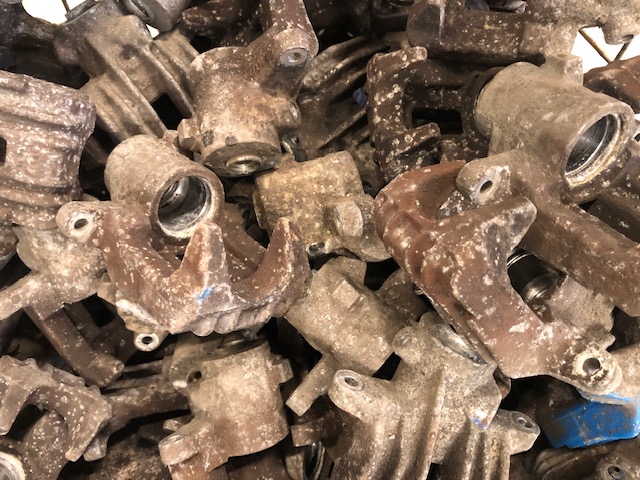
EXAMPLES OF WET BLASTING APPLICATIONS
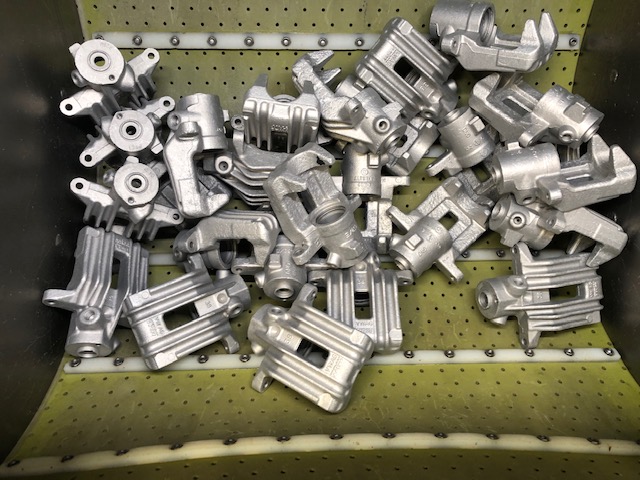
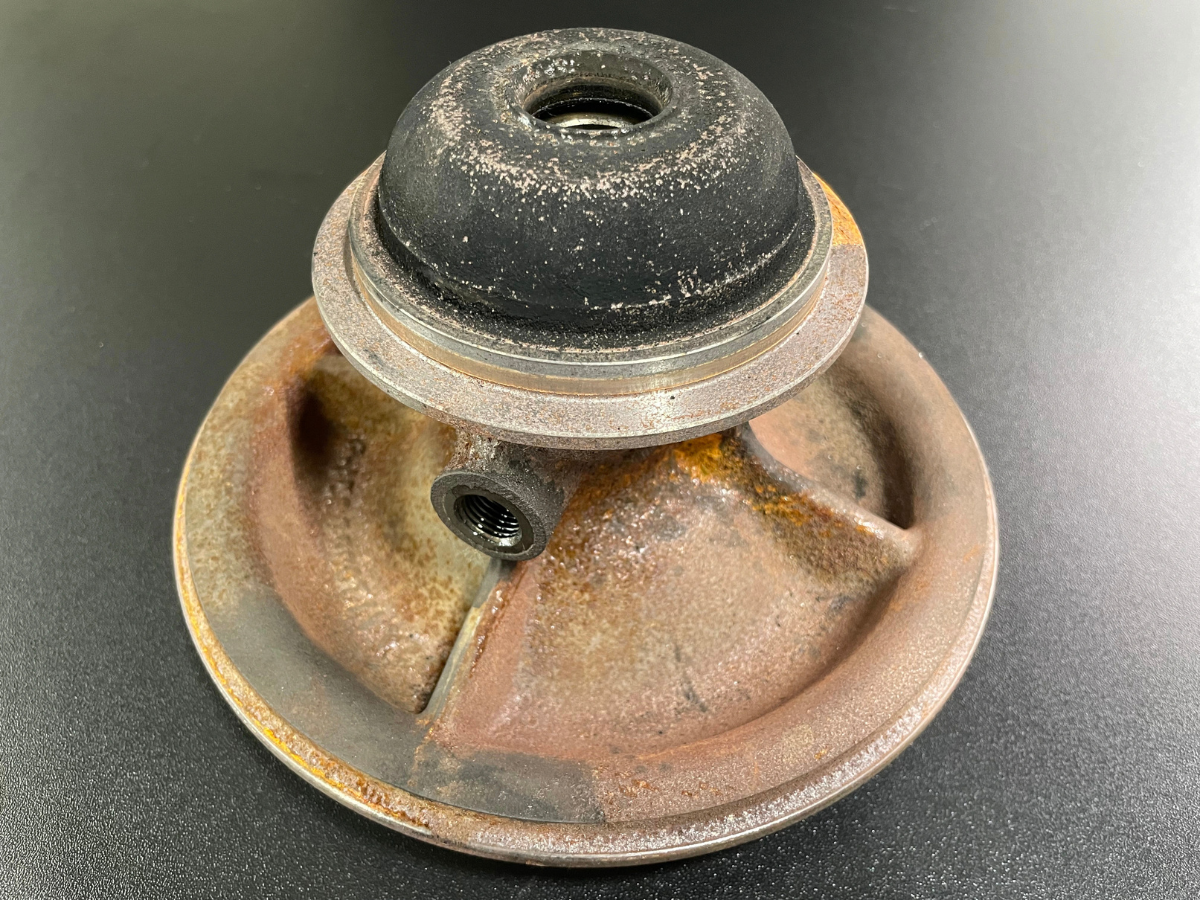
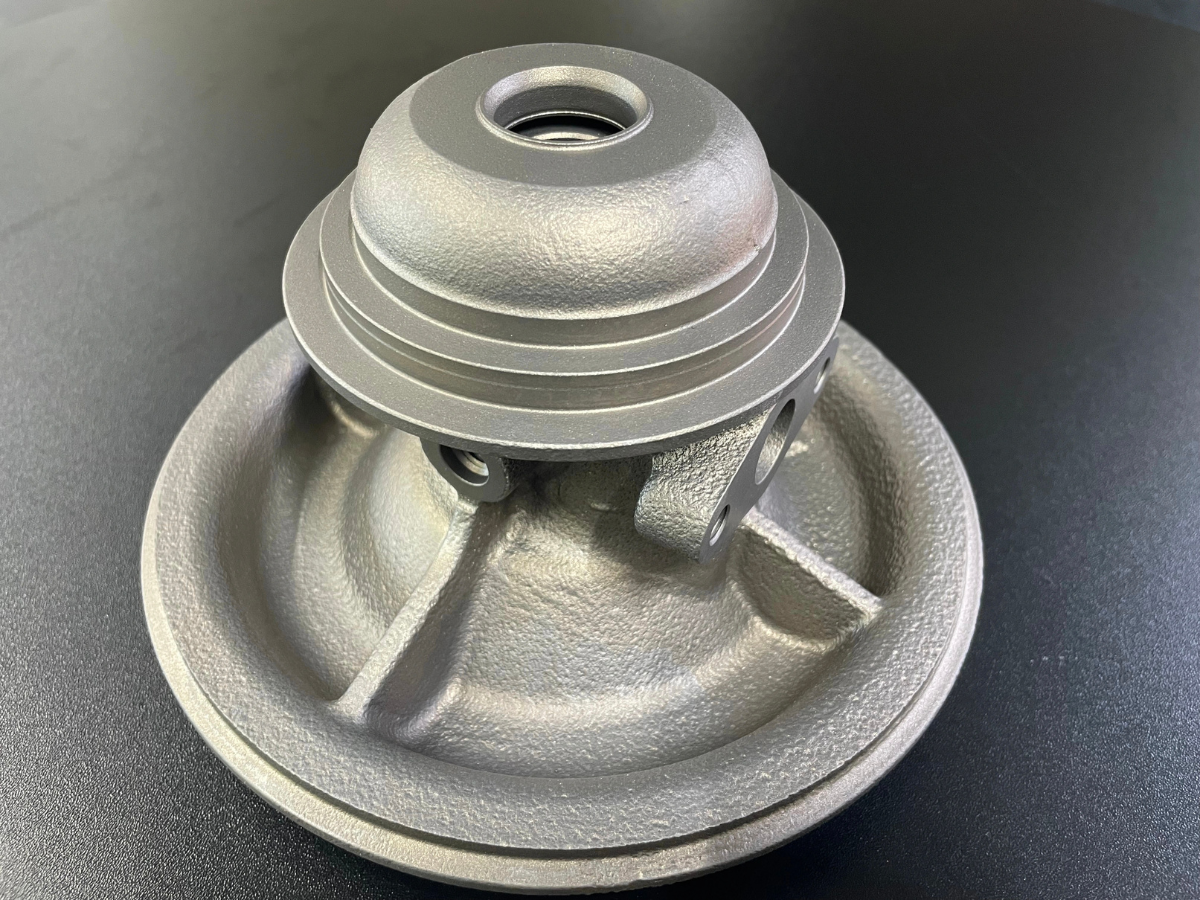
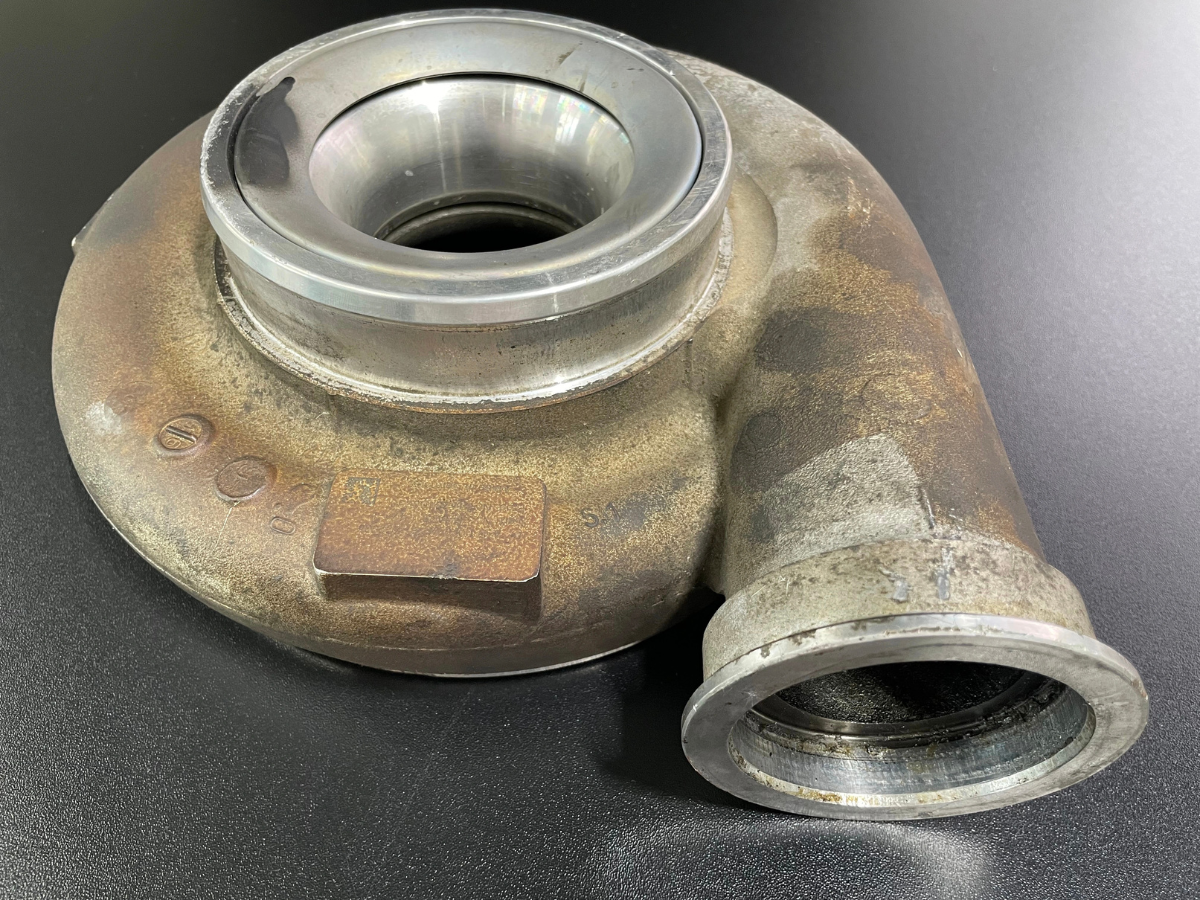
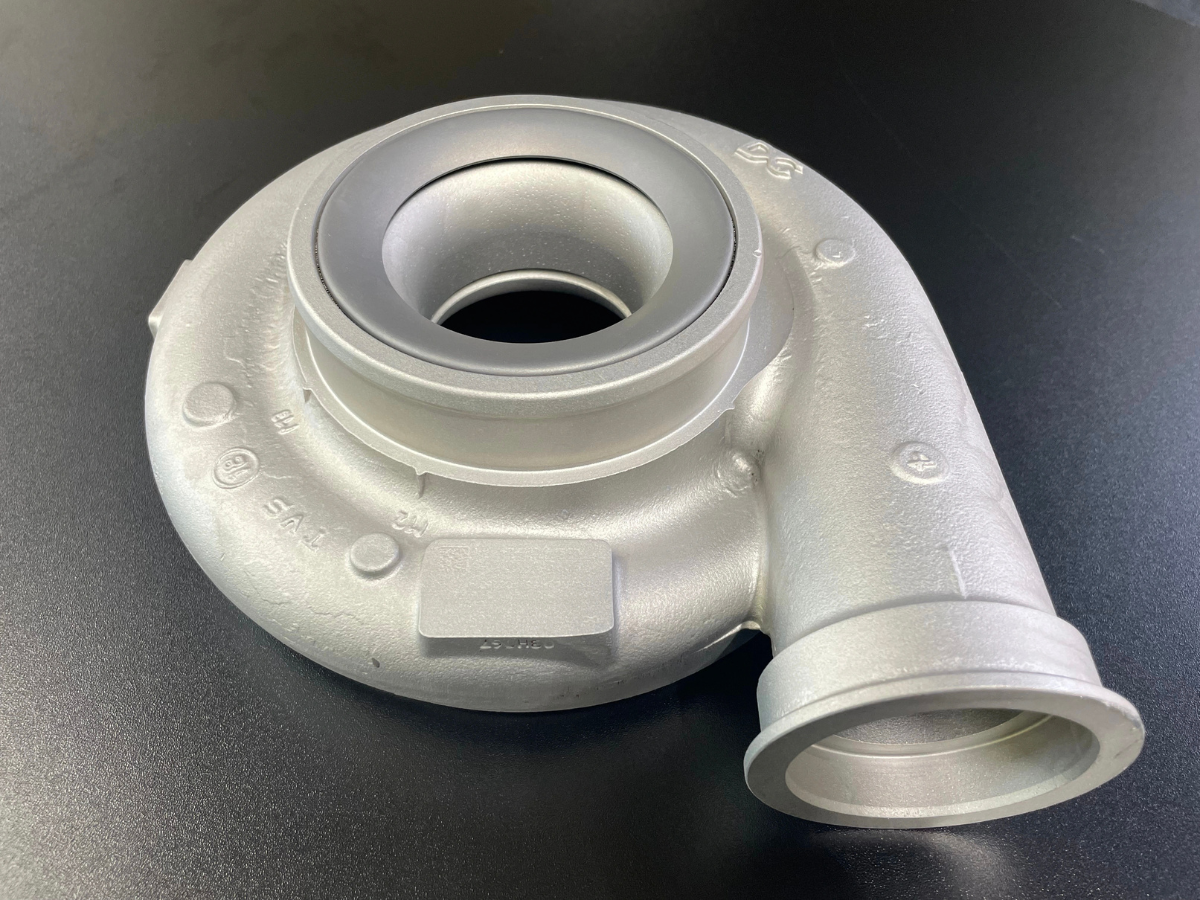
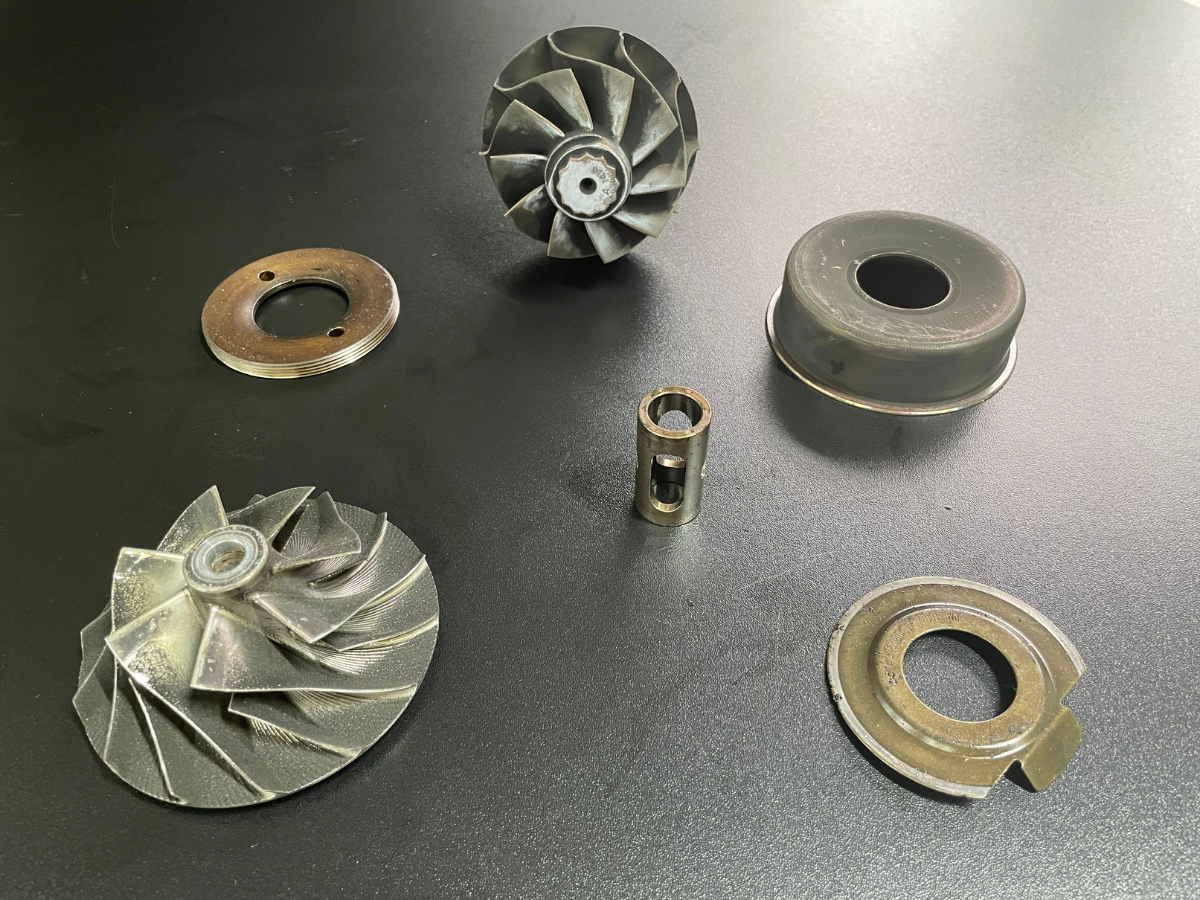
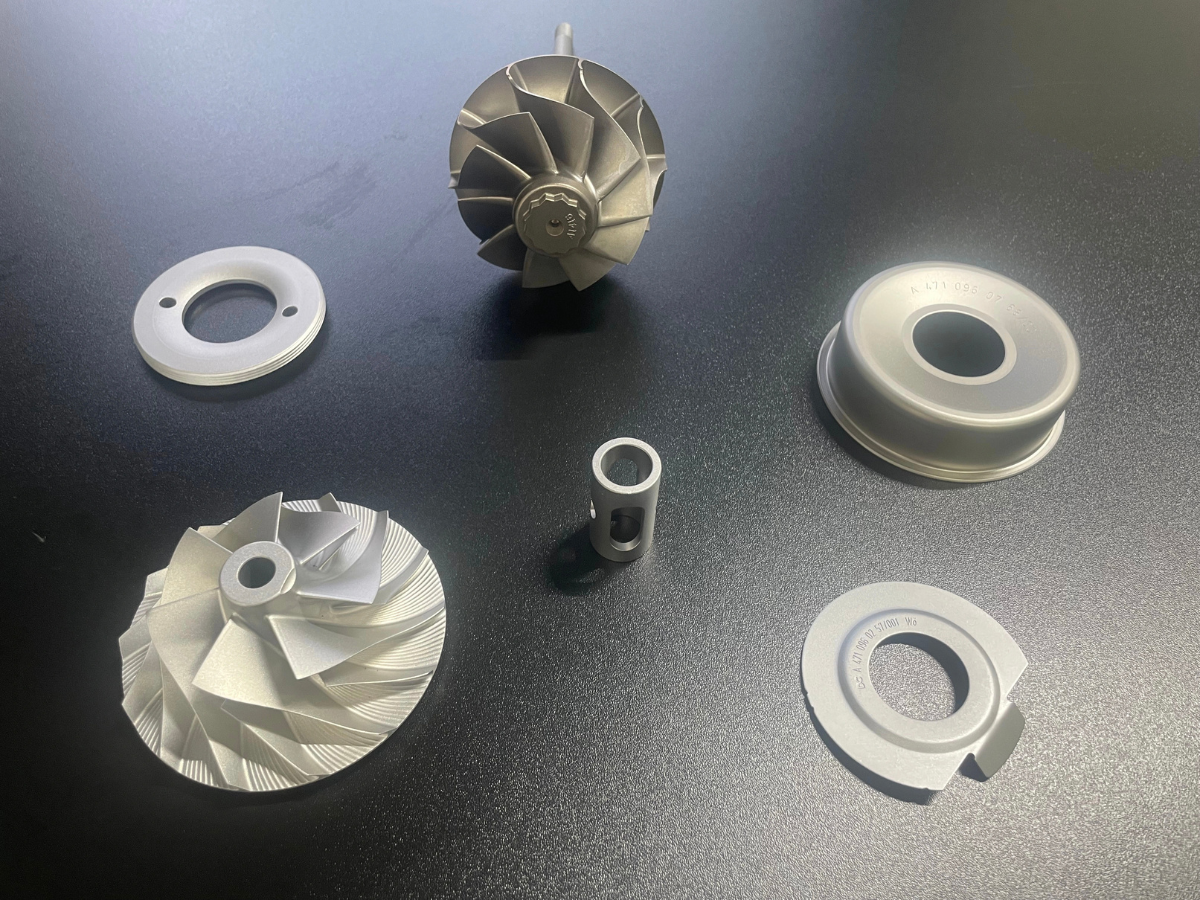
Heavily contaminated components vs. after 10 minutes of wet blasting
Wet Blasting Systems Product Overview
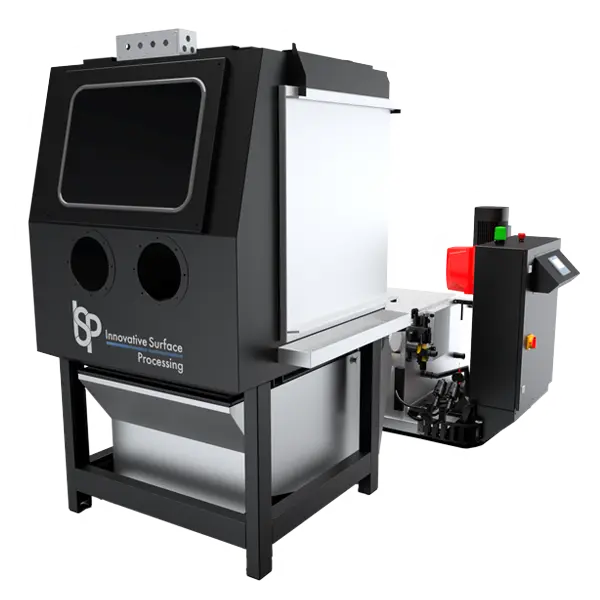
Hand-held
wet blasting cabinets
(nozzle type)
.
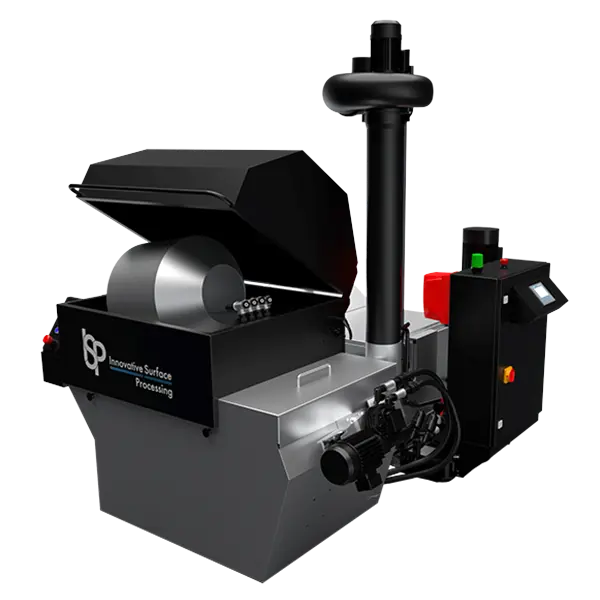
Tumbler
wet blasting systems
(nozzle type)
.
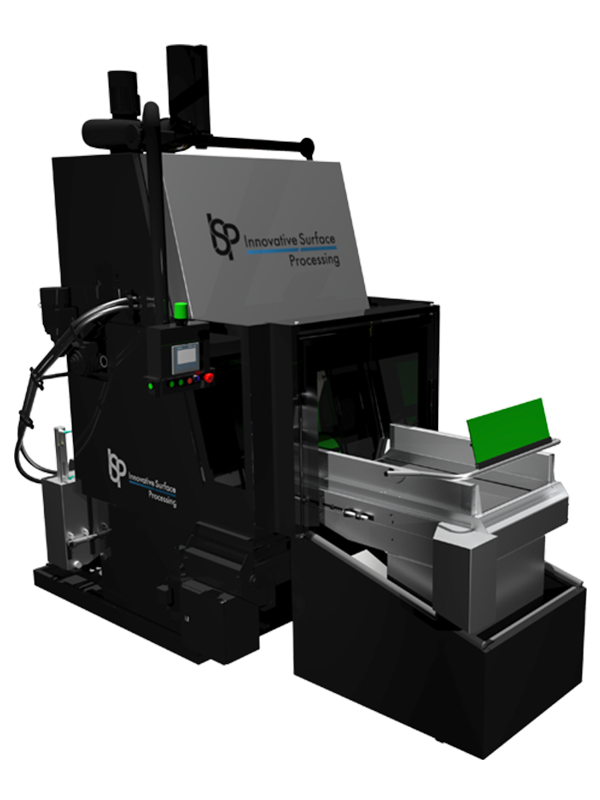
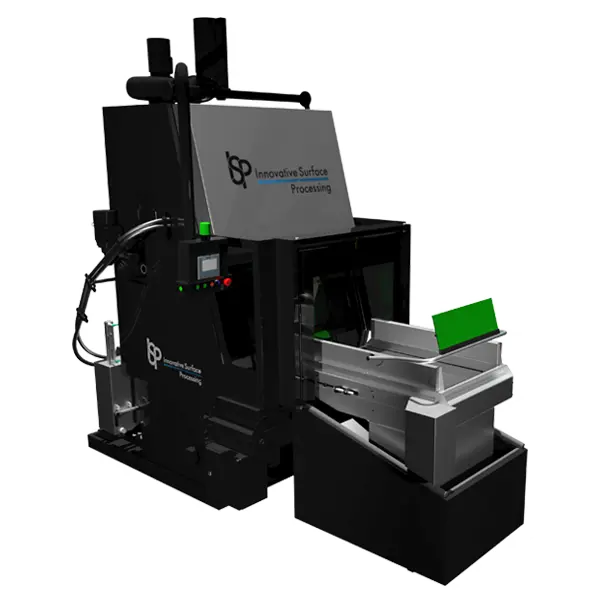
Trough conveyor
wet blasting systems
(centrifugal wheel type)
.
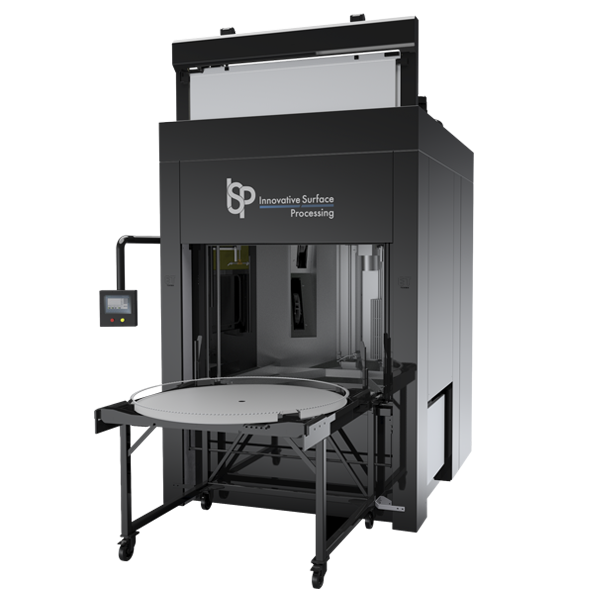
Rotary table
wet blasting systems
(centrifugal wheel type)
.
Overhead conveyor
wet blasting systems
(centrifugal wheel type)
.
Satellite
wet blasting systems
(centrifugal wheel type)
.
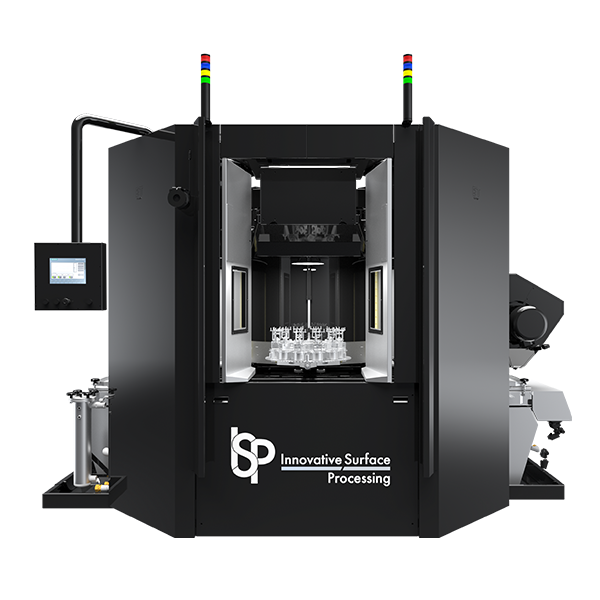
Satellite batch
wet blasting systems
(centrifugal wheel type)
.
Custom-built
wet blasting systems
(nozzle/centrifugal wheel type)

WET BLASTING TECHNOLOGY IN ACTION
Videos, animations & practical examples
Experience ISP’s wet blasting technology in practical use. Our videos and animations showcase real-life systems, typical applications and the complete process – from heavily contaminated components to clean, process-reliable surfaces. This gives you a realistic impression of the functionality, performance and level of automation of modern wet blasting systems.
4 K Satellite Wet Blasting System
See ISP’s wet blasting technology in action. Our videos and animations showcase real-life systems, typical applications and the entire process – from heavily contaminated components to clean, process-reliable surfaces. This gives you a realistic impression of how modern wet blasting systems work, their performance and their level of automation.
ISP – ET 6650 Overhead Conveyor Wet Blasting System
Experience ISP’s wet blasting technology in action. Our videos and animations showcase real-life systems, typical applications and the entire process – from heavily contaminated components to clean, process-reliable surfaces. This gives you a realistic impression of the functionality, performance and level of automation of modern wet blasting systems.
ISP – ET 6600 Rotary Table Wet Blasting System
Experience ISP’s wet blasting technology in action. Our videos and animations showcase real-life systems, typical applications and the entire process – from heavily contaminated components to clean, process-reliable surfaces. This gives you a realistic impression of the functionality, performance and level of automation of modern wet blasting systems.
ISP – ET 100 RB Trough-Type Wet Blasting System
Experience ISP’s wet blasting technology in action. Our videos and animations showcase real-life systems, typical applications and the entire process – from heavily contaminated components to clean, process-reliable surfaces. This gives you a realistic impression of the functionality, performance and level of automation of modern wet blasting systems.

SUSTAINABILITY AND THE ENVIRONMENT
Wet blasting technology enables environmentally friendly and resource-efficient surface treatment. A closed-loop process water system significantly reduces water consumption and ensures consistent process quality. The continuous treatment of the process water ensures long service life and low operating costs. At the same time, the entire process requires no harmful chemical additives.
- Closed-loop process water circuit with continuous cleaning
- Reduced water consumption and long service life
- Low running costs during operation
- No use of harmful chemicals or additives

PROFESSIONAL SERVICE FOR YOUR EQUIPMENT
Consultancy, training, maintenance and repair – all from a single source
An efficient service is crucial for reliable, cost-effective and reproducible results in industrial surface treatment. ISP not only assists you with the selection and commissioning of your systems, but also supports you throughout their entire lifecycle – from process engineering consultancy to repair.
Our services are aimed at both existing systems and new projects and are available across all manufacturers for all common system types. The aim is to optimise your processes, minimise downtime and maximise the performance of your systems in the long term.
- Consultancy & sample processing
- 24-hour service hotline
- In-house training
- Spare parts supply
- Repairs & relining
- Machine maintenance & process optimisation
- Contract manufacturing under cleanroom conditions (ISO 6)
Are you interested in the unbeatable advantages of wet blasting systems in the field of blasting technology?

Your contact person
Bertram Klee
FAQ
What is wet blasting?
Wet blasting is a dust-free and material-friendly surface treatment process in which a mixture of water and abrasive is blasted onto the workpiece using compressed air. The water acts as an energy dampener, reduces material removal and enables precise, material-friendly processing. This process is particularly suitable for metal components or additively manufactured parts.
Wet blasting or dry blasting – which method is the better choice?
A comparison of wet blasting and dry blasting shows that dry blasting reaches its limits in many industrial applications. The high levels of dust generated require complex protective and extraction measures and often lead to additional safety requirements. Furthermore, several process steps are usually necessary, as dry blasting is followed by a separate cleaning process.
Wet blasting, on the other hand, operates dust-free, without electrostatic effects and with significantly lower heat generation. This protects sensitive components and achieves smoother, more uniform surfaces. By combining blasting and cleaning in a single process, wet blasting technology is more cost-effective and particularly suitable for precision applications as well as the post-processing of additively manufactured components.
What applications is wet blasting suitable for?
Wet blasting is suitable for cleaning, degreasing, rust removal, paint stripping, deburring, rounding, satin finishing and polishing, as well as for surface preparation prior to coating. Post-processing of additively manufactured components is also a typical application.
Why is wet blasting suitable for industrial finishing?
Wet blasting enables dust-free, gentle and reproducible industrial finishing, particularly for additively manufactured components that require high standards of surface quality and dimensional accuracy.
Which materials can be wet blasted?
The wet blasting process can be used to treat a wide range of materials, including steel, stainless steel, aluminium, non-ferrous metals, plastics and delicate precision parts. Thanks to the adjustable blasting intensity, the process is extremely versatile.
How long does the wet blasting process take?
The wet blasting process usually takes between 5 and 15 minutes per component or batch. The exact processing time depends on several factors, including the type and degree of contamination, component geometry, material, desired surface quality, as well as the set blasting intensity and abrasive concentration. Thanks to its high process stability, wet blasting is highly reproducible and cost-effective even with short processing times.
Is wet blasting suitable for delicate or thin-walled components?
Yes, wet blasting is particularly well suited to delicate and thin-walled components. Thanks to the energy-dampening effect of the water, only minimal mechanical and thermal stress is exerted, meaning that tight dimensional tolerances can be maintained.
What surface quality is achieved with wet blasting?
Wet blasting produces smooth, uniform and compacted workpiece surfaces with a high degree of reproducibility. Typical surface roughness values are well below 100 µm Ra; in decorative applications, a uniform matt finish is achieved.
Why is wet blasting particularly effective?
Thanks to the energy-dampening effect of the water, contaminants are gently loosened without damaging the surface or subjecting the component to thermal stress. At the same time, the closed-loop water system ensures that loosened particles are carried away and filtered out.
How cost-effective is wet blasting?
Wet blasting is cost-effective because cleaning and blasting take place in a single process. The process water is recirculated and continuously purified, which ensures a long service life, low media consumption and low operating costs.